
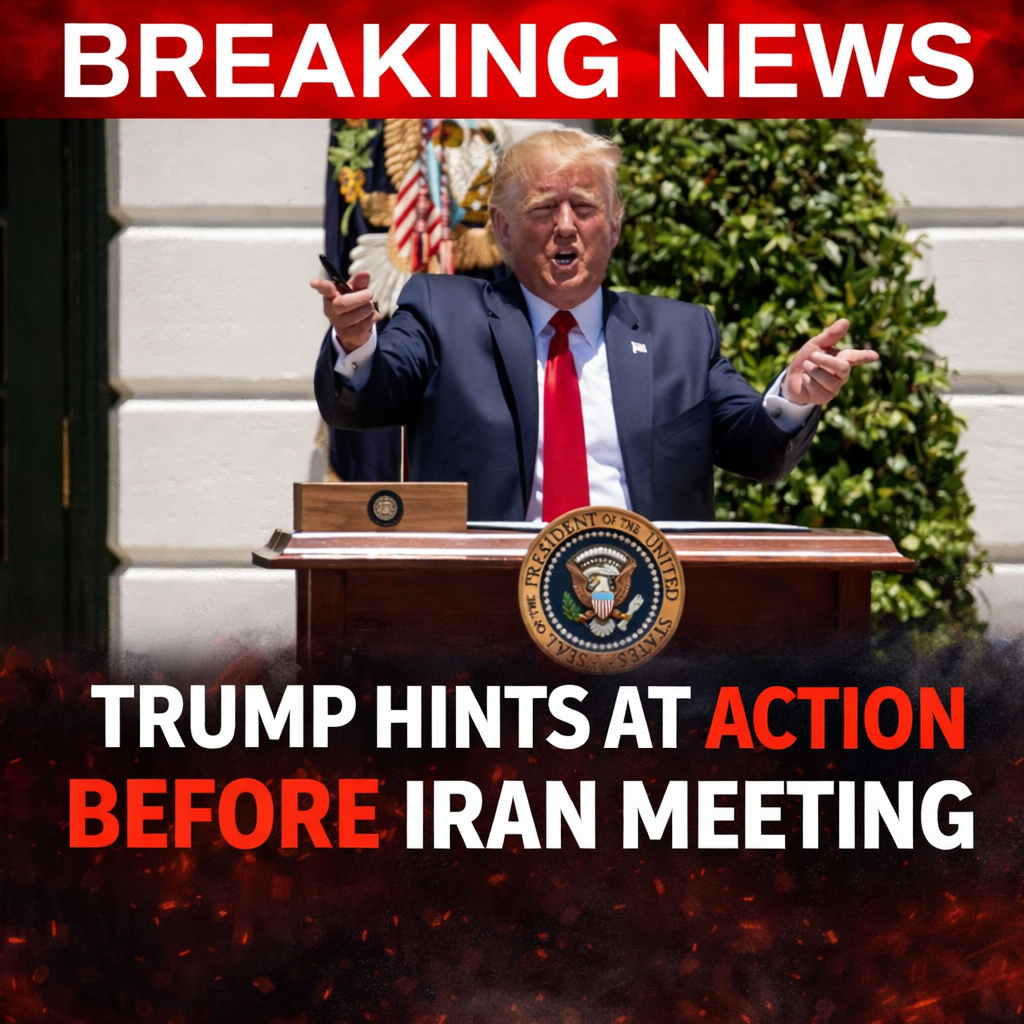
Former President Donald Trump has reignited controversy over U.S. foreign policy after saying that a meeting is being arranged with leaders of Iran, while simultaneously suggesting the United States “may have to act” before those talks take place. The remarks, delivered publicly, immediately raised questions about what such action could entail and whether it risks escalating tensions ahead of diplomacy.
Trump did not provide details about the nature of the proposed meeting or clarify what he meant by potential action beforehand. The lack of specificity has fueled concern among foreign policy analysts, who warn that ambiguous statements involving military or coercive measures can have serious consequences, particularly in a volatile region where miscalculation carries high risk.
U.S.–Iran relations have long been fraught, shaped by disputes over nuclear activity, regional influence, sanctions, and past military confrontations. Statements that appear to blur the line between diplomacy and force are closely watched by allies and adversaries alike. Experts note that even rhetorical signals can affect markets, military postures, and diplomatic channels.
Critics argue that suggesting action before talks undermines the purpose of negotiation. They say diplomacy is most effective when it is clear, consistent, and not paired with open-ended threats that could be interpreted in multiple ways. In their view, successful negotiations depend on reducing uncertainty—not amplifying it.
Supporters of Trump counter that strong rhetoric is a negotiating tactic designed to project leverage. They argue that signaling readiness to act can pressure adversaries to come to the table more willing to compromise. This approach, they say, reflects a belief that deterrence and diplomacy are not mutually exclusive.
Still, former national security officials caution that words matter, especially when spoken by figures with influence over public opinion and global perceptions of U.S. intentions. Ambiguity can heighten tensions on all sides, increasing the chance of misinterpretation or unintended escalation.
The comments also arrive amid heightened global sensitivity to conflicts involving major powers and regional flashpoints. Any suggestion of preemptive action, even if rhetorical, is likely to be scrutinized by international observers and U.S. allies concerned about stability and coordination.
For now, there is no public confirmation of a scheduled meeting, nor any official indication of impending action. The absence of details has left room for speculation, which analysts say is precisely what makes such statements risky.
As the situation develops, attention will focus on whether further clarification is offered—and whether diplomacy or confrontation ultimately defines the next phase of U.S.–Iran engagement. What is clear is that remarks hinting at action before talks have reopened a broader debate about strategy, communication, and the balance between deterrence and diplomacy in American foreign policy.