
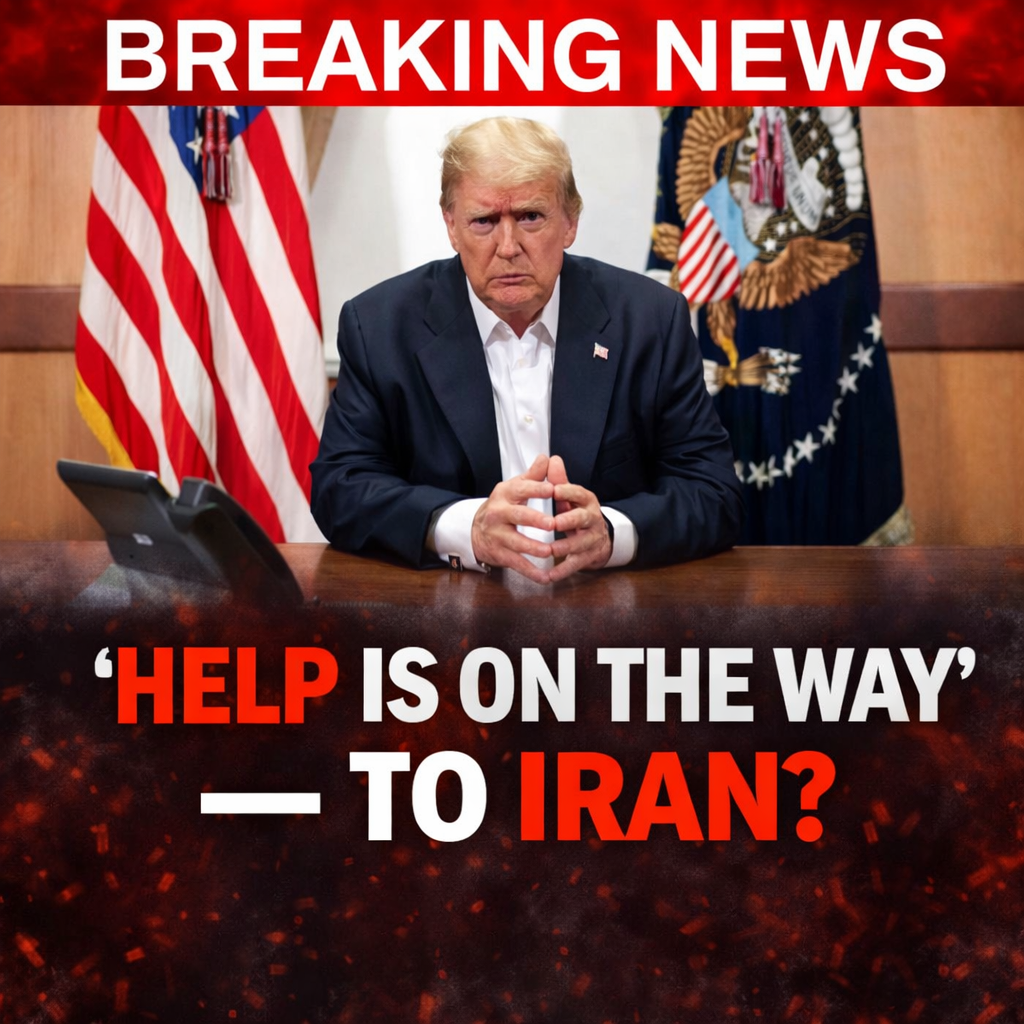
A new social media post by Donald Trump is drawing intense scrutiny after he issued a dramatic message directed at protesters in Iran, claiming that “help is on the way” while announcing that meetings with Iranian officials had been canceled.
In the post, Trump urged what he described as “Iranian patriots” to continue protesting and to “take over your institutions,” while warning that individuals responsible for violence against protesters would “pay a big price.” He concluded the message by asserting that help was imminent, without explaining what form that help would take or who would be providing it.
The ambiguity of the statement immediately triggered concern among foreign policy experts, lawmakers, and national security analysts. While rhetoric supporting human rights movements abroad is not uncommon, critics note that Trump’s language went beyond moral support and appeared to hint at direct involvement or intervention—without any clarification or legal authority.
Diplomatic analysts warned that such statements, particularly from a former president with ongoing political influence, can have real-world consequences. Even vague suggestions of external “help” can be interpreted by foreign governments as a threat, potentially escalating tensions or putting protesters at greater risk.
Iran’s relationship with the United States has long been adversarial, shaped by decades of sanctions, proxy conflicts, and nuclear negotiations. Experts stress that communication involving Iran must be precise and measured, as misinterpretations can quickly spiral into diplomatic or military crises.
Supporters of Trump argue that the message was rhetorical and intended to show solidarity with Iranians opposing repression. They say Trump has historically used provocative language to draw attention to human rights abuses and pressure authoritarian governments.
Critics counter that the lack of clarity is exactly the problem. They argue that calls to “take over institutions” paired with claims that “help is on the way” risk inflaming an already volatile situation. Without context, such language could be seen as endorsing unrest while implying U.S. backing—something that carries serious geopolitical implications.
Former national security officials have emphasized that private citizens, especially former presidents, do not speak for the U.S. government. However, they acknowledge that Trump’s global profile means his words are often perceived internationally as more than personal opinion.
The controversy also reignites broader concerns about messaging, accountability, and the responsible use of influence in international affairs. Foreign policy experts note that even symbolic statements can alter perceptions, embolden crackdowns, or shift diplomatic calculations.
As of now, there has been no official confirmation of any U.S. action related to Trump’s statement, nor clarification regarding what “help” was meant to signify. The lack of follow-up has only intensified debate and speculation.
What remains clear is that the post has reopened questions about the boundaries between political rhetoric and foreign policy—and the risks of blurring that line in an already unstable global environment.