
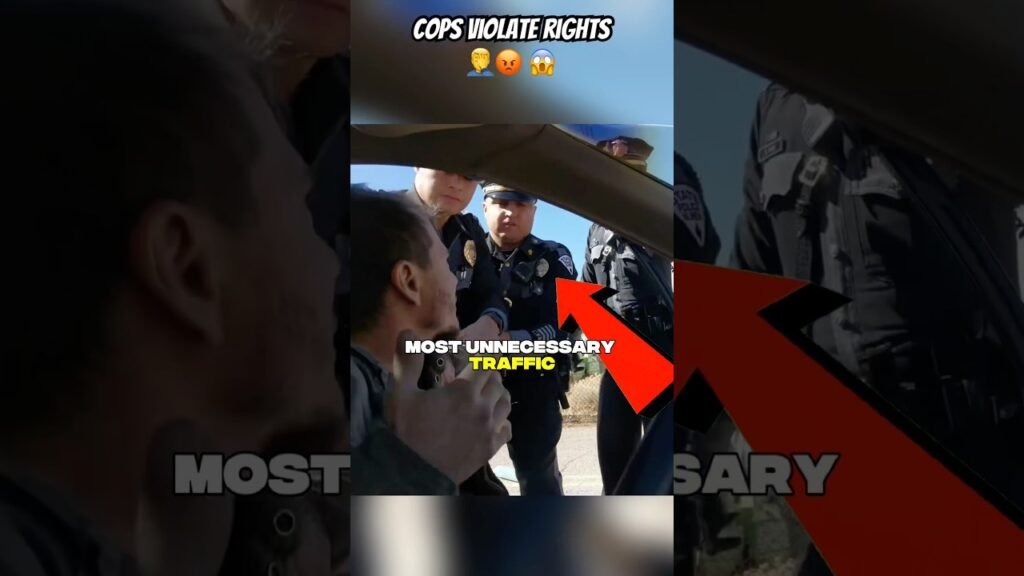
What began as a routine traffic stop for a suspected seatbelt violation quickly escalated into a chaotic and distressing confrontation, leaving onlookers questioning how a minor infraction turned into a forceful arrest within minutes. The incident, recorded by those inside the vehicle, captures a rapid breakdown in communication between police and occupants that intensified almost immediately.
According to the occupants, officers pulled the vehicle over alleging that the driver was not wearing a seatbelt. The occupants disputed the claim, repeatedly stating that the seatbelt was fastened. From the outset, tensions were high. As officers approached the vehicle, they demanded that the window be opened, despite the occupants insisting they were recording the interaction and asking why they had not yet been asked for a driver’s license or registration.
The situation deteriorated quickly when officers threatened to break the window. The occupants expressed fear and confusion, questioning why the encounter was escalating over what they believed was a minor and incorrect allegation. Voices grew louder, and pleas to remain calm were made from inside the vehicle as officers continued issuing commands.
Within seconds, officers began physically engaging the driver. The recording captures panicked shouts from passengers urging officers not to break the driver’s arm as he was pulled from the vehicle. The driver repeatedly stated that he was wearing a seatbelt, but his claims appeared to have no effect on the unfolding events. Officers ordered him to exit the vehicle and then directed him to the ground, escalating the stop from verbal confrontation to physical restraint.
At the same time, officers ordered a female passenger to step out of the vehicle, issuing commands in rapid succession. The overlapping instructions, raised voices, and physical force created a scene of visible distress, with passengers pleading for calm and questioning the necessity of the officers’ actions.
Critics of the incident argue that the stop highlights how quickly minor traffic violations can escalate when communication breaks down. Traffic stops are often tense for both drivers and officers, but the use of force in situations involving nonviolent, low-level infractions continues to draw public scrutiny. Legal experts frequently emphasize that compliance during a stop is important, but they also stress that officers are trained to de-escalate situations whenever possible.
Supporters of law enforcement counter that officers must maintain control of traffic stops for their own safety and that refusal to follow commands, even if disputed, can prompt stronger responses. However, the footage raises questions about proportionality, particularly when no immediate threat appears evident in the exchange.
The incident has since circulated widely, fueling debate about policing tactics, citizen rights during traffic stops, and the role of recording encounters. The presence of cameras, both from civilians and law enforcement, has become a central factor in modern policing, often providing critical context but also amplifying public reaction.
As with many such cases, the full circumstances will likely be reviewed by authorities to determine whether proper procedures were followed. What remains undeniable is that a stop over a seatbelt—a violation that typically results in a warning or citation—ended in physical force, fear, and confusion. For many viewers, the incident serves as a stark reminder of how quickly everyday encounters on the road can turn into something far more serious, leaving lasting questions about necessity, judgment, and trust between police and the public.