
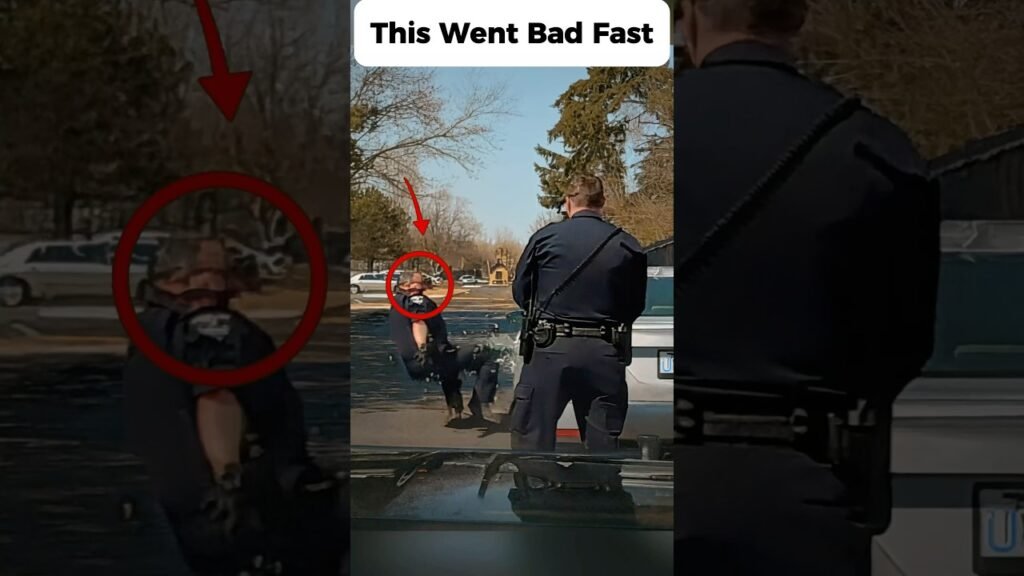
What began as a calm and seemingly routine traffic stop quickly escalated into a confrontational encounter when a driver and a police officer disagreed over a basic request for identification. The incident highlights how quickly a stop can spiral when expectations, authority, and communication collide.
The encounter opened politely. The officer greeted the driver and asked how he was doing before requesting to see his driver’s license. The driver, who appeared calm and composed, did not refuse outright. Instead, he asked a simple question: he wanted to know why he had been pulled over. He stated that he would be happy to provide his identification once he understood the reason for the stop.
The officer, however, remained firm. He insisted that the driver hand over his license first, explaining that he would provide further information only after verifying the driver’s identity. What followed was a tense back-and-forth, with neither side willing to yield. The driver continued to request an explanation, while the officer emphasized that providing identification during a traffic stop is a legal requirement.
As the exchange grew more heated, the officer warned the driver that failure to provide identification was an arrestable offense. He framed the situation in stark terms, telling the driver he could comply “the easy way or the hard way.” Moments later, the officer radioed in the vehicle’s information and called for backup, signaling that the situation was escalating beyond a routine roadside interaction.
The arrival of additional officers marked a clear turning point. Commands became louder and more urgent. The driver was ordered to get out of the car. While he appeared confused and attempted to respond, the tone of the encounter had shifted decisively. What had started as a discussion about procedure now involved multiple officers asserting control of the scene.
Observers of the incident have pointed out how quickly the situation intensified over what many consider a minor issue. Traffic stops often involve a legal obligation for drivers to provide identification upon request, regardless of whether the reason for the stop has been explained. At the same time, drivers frequently expect transparency and clarification, especially when they believe they have done nothing wrong.
Legal experts note that traffic stops are highly structured encounters governed by law and officer safety protocols. Officers are trained to establish control early, while drivers are expected to comply first and contest later through legal channels if they believe their rights were violated. When either side challenges that sequence, tension can rise rapidly.
The incident has sparked debate online, with some viewers criticizing the officer for escalating too quickly and others arguing that the driver’s refusal to immediately provide identification left officers with little choice. The footage underscores a broader issue in modern policing: how misunderstandings about rights and responsibilities can transform ordinary interactions into confrontations.
In the end, the encounter serves as a cautionary example for both drivers and law enforcement. Clear communication, patience, and an understanding of legal obligations can be critical in preventing minor traffic stops from becoming volatile situations. What was “all over a license,” as some observers put it, became a moment that reignited discussion about authority, compliance, and the fragile balance of trust on the roadside.