
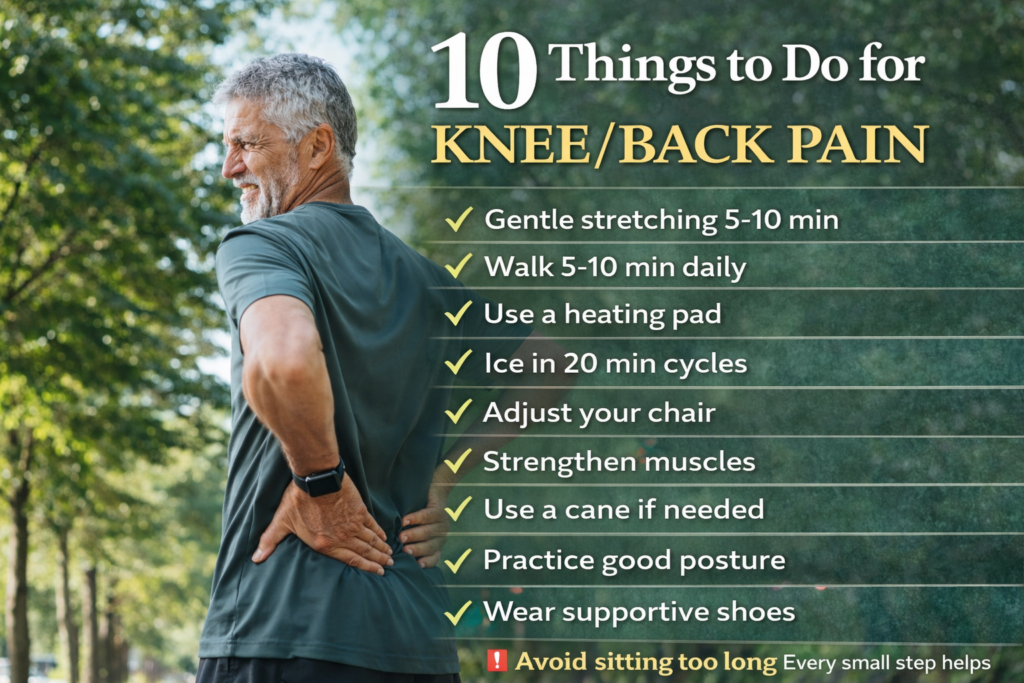
Knee and back pain can sneak into everything—walking, sitting at work, climbing stairs, even sleeping. The good news: a few small daily habits can reduce stiffness, calm flare-ups, and help you move with less discomfort. These tips are simple, low-cost, and easy to start today—especially if your pain is mild to moderate and not caused by a recent serious injury.
Before you begin, listen to your body. Mild stretching discomfort is normal, but sharp pain isn’t. If pain is severe, worsening, or you have numbness, weakness, fever, loss of bladder/bowel control, or pain after a fall or crash, get medical care urgently.
10 things to do for knee/back pain
1) Gentle stretching (5–10 minutes)
Start your day or end it with light stretches. Focus on hips, hamstrings, calves, and lower back. Tight muscles often pull on joints and can make knees and back feel worse.
2) Walk 5–10 minutes daily
Motion is medicine—especially for stiff backs and achy knees. Keep it easy and flat. The goal is consistency, not speed. Add a minute every few days if it feels good.
3) Use a heating pad
Heat helps relax muscles and reduce stiffness. It’s great for tightness in the lower back or sore muscles around the knee. Try 15–20 minutes, especially before stretching.
4) Ice in 20-minute cycles
Ice can calm inflammation and numb pain, especially after activity or during a flare. Use a towel barrier and limit icing to about 20 minutes at a time.
5) Adjust your chair
Your setup matters more than you think. Keep feet flat, hips and knees around 90 degrees, and your lower back supported. If you sit a lot, a small pillow or rolled towel behind the lower back can help.
6) Strengthen muscles (slow and steady)
Weak glutes, core, and legs can overload the knee and strain the back. Start with gentle moves like bridges, wall sits, step-ups, or modified planks. Two or three short sessions per week is enough to begin.
7) Use a cane if needed
Using a cane temporarily doesn’t mean you’re “giving up”—it’s a tool to reduce stress on a painful knee and help you stay active while healing. If unsure, a physiotherapist can fit it correctly.
8) Practice good posture
Think “tall spine, shoulders relaxed, chin slightly tucked.” Good posture reduces stress on the lower back and helps your core support you instead of your joints doing all the work.
9) Wear supportive shoes
Worn-out shoes can change how your knees and hips track, which can affect the back too. Choose supportive footwear—especially if you’re walking more.
10) Avoid sitting too long
Set a timer: stand up every 30–60 minutes. Even a 30-second reset—standing, a few steps, a quick stretch—can make a difference.
Small steps add up. Pick two tips to start today, stay consistent for two weeks, and build from there. If pain persists beyond a few weeks, keeps returning, or limits daily life, consider seeing a healthcare professional or physiotherapist for a personalized plan.