
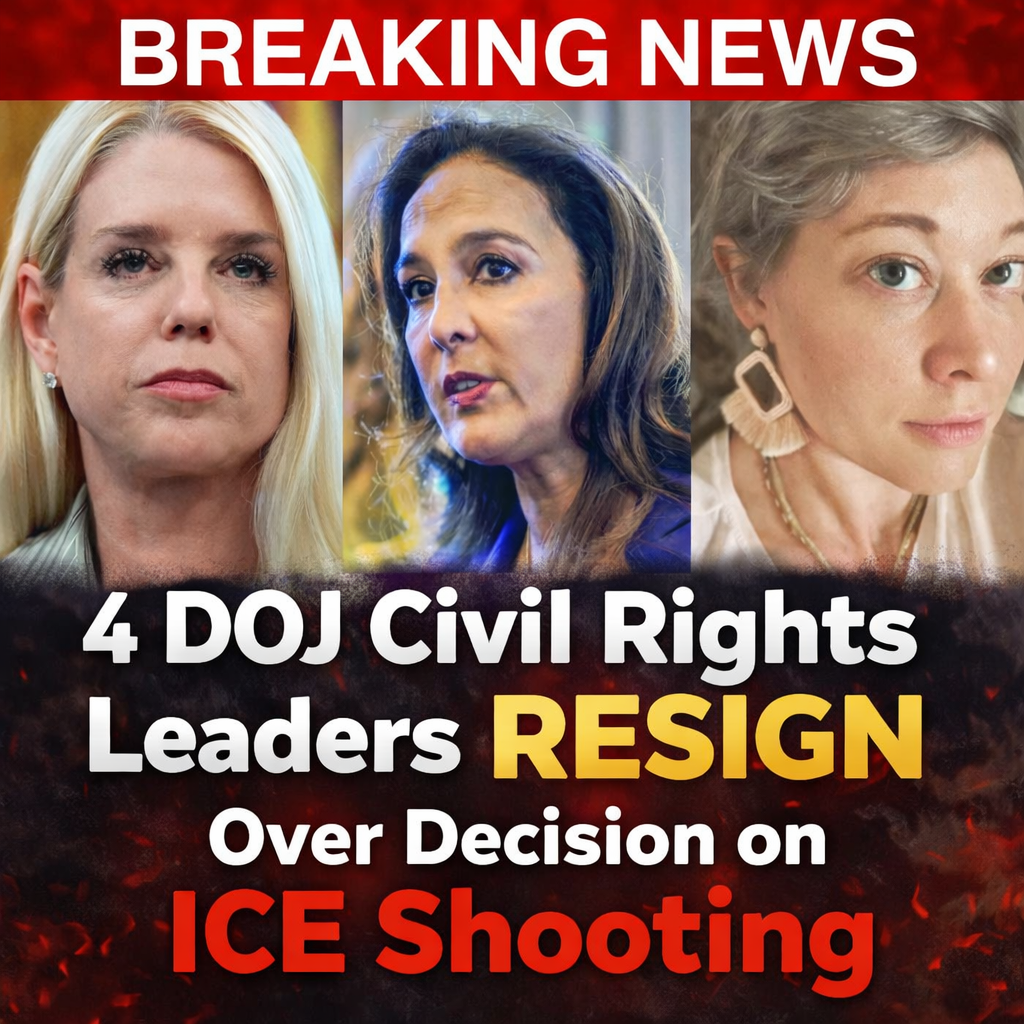
A significant shakeup inside the U.S. Department of Justice has drawn renewed attention to accountability and oversight within federal law enforcement. Four senior leaders from the Civil Rights Division have reportedly resigned following a controversial decision not to pursue a federal investigation into the fatal shooting of Renee Good by an Immigration and Customs Enforcement officer.
The resignations came after Harmeet Dhillon, the Assistant Attorney General overseeing the Civil Rights Division, declined to open an investigation into the incident. Under long-standing DOJ practice, the division’s criminal section typically reviews any fatal shooting involving a law enforcement officer, particularly when questions of excessive force may be involved.
According to individuals familiar with the situation, the decision not to investigate triggered serious concern among senior staff. Several leaders reportedly believed that failing to examine the case undermined the division’s core mission of enforcing civil rights and ensuring that no law enforcement agency operates beyond scrutiny.
Sources indicated that the ICE shooting was not the only issue contributing to internal tension. Department insiders described broader unease over multiple decisions made by division leadership, suggesting a growing rift between career officials and political appointees regarding how civil rights enforcement should be handled.
The departures mark a rare and dramatic moment for the DOJ’s Civil Rights Division, which has historically played a central role in investigating allegations of misconduct by law enforcement agencies at every level. Critics argue that refusing to investigate a fatal shooting — regardless of the agency involved — risks eroding public trust and sends a troubling signal about accountability.
Advocates for civil rights and police oversight say the resignations highlight a fundamental principle: investigations exist not to assign blame prematurely, but to establish facts and maintain confidence in the justice system. They stress that declining to investigate does not resolve questions surrounding a death — it amplifies them.
Supporters of the decision caution that federal investigations are discretionary and often involve complex legal thresholds. They argue that not every fatal incident automatically warrants DOJ intervention and that leadership must weigh jurisdictional limits, evidence, and prosecutorial standards.
Still, critics counter that the Civil Rights Division was created precisely to examine difficult and sensitive cases involving state and federal authority. They warn that selective enforcement of oversight responsibilities risks creating a perception that certain agencies are shielded from accountability.
The controversy has intensified calls for consistent standards when law enforcement officers use lethal force. Civil rights groups emphasize that the rule of law depends on equal scrutiny, regardless of whether the badge belongs to a local police officer or a federal agent.
As questions continue to swirl, the resignations have placed the DOJ under a harsh spotlight. Lawmakers and advocacy organizations are now pressing for greater transparency surrounding the decision and the circumstances that led four experienced leaders to walk away.
At the heart of the debate is a simple but powerful principle: when someone is killed during a law enforcement operation, accountability demands investigation. Whether the DOJ will revisit its decision remains uncertain, but the fallout has already sparked a national conversation about justice, oversight, and trust in federal institutions.