
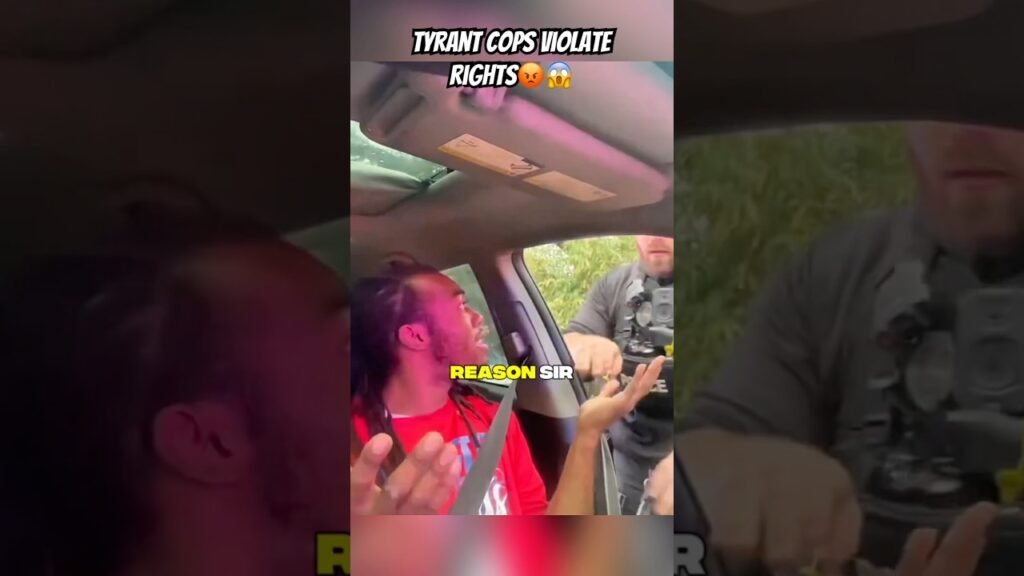
A traffic stop escalated into a tense standoff after a driver questioned the legitimacy of being pulled over, resulting in a widely shared video that has fueled debate about police authority and civilian rights. The footage, recorded from inside the vehicle, shows multiple officers surrounding a car with the driver’s door open while attempting to explain the reason for the stop. The driver, wearing a red shirt, repeatedly challenges the officers’ claims, arguing that no law was broken.
The recorded exchange begins with the driver asking for the specific reason he was pulled over. An officer references “inclement weather,” suggesting that the driver may have been required to use headlights or adjust his driving due to visibility concerns. The driver, however, disputes this explanation immediately, insisting that it is not raining and that weather conditions do not justify the stop. This early disagreement sets the tone for a long, contentious conversation.
As the interaction continues, more officers appear and attempt to communicate with the driver. They claim the vehicle’s headlights may not have been functioning properly, or were not being used when legally required. The driver rejects this reasoning, stating, “Doesn’t matter,” and pressing for clearer justification. Meanwhile, the officers attempt to maintain control of the situation while avoiding escalation. Their body language remains tense, and they repeatedly request compliance.
The video captures the frustrations on both sides: officers trying to conduct a lawful investigation and a driver who believes he is being unjustly targeted. This dynamic mirrors many similar viral encounters in recent years, where routine stops turn into heated arguments recorded on cell phones. Such recordings have become powerful tools for public accountability, but they also reveal how quickly misunderstandings can escalate when communication breaks down.
At one point, the driver appears to give partial consent for officers to proceed, saying, “Alright, go for…” as if acknowledging their request. Nevertheless, tensions remain high, and additional officers position themselves around the vehicle for safety. The man continues to challenge the officers’ reasoning, asking, “What’s your…” before being interrupted, indicating ongoing disagreement.
This incident highlights broader issues surrounding traffic enforcement, the interpretation of driving laws, and public perceptions of police authority. Many viewers interpret the officers’ actions as overreach, while others believe the driver unnecessarily escalated the interaction. Regardless of perspective, the video underscores the importance of calm, clear communication—a crucial element often missing in confrontational traffic stops.
As discussions about police reform and citizens’ rights continue nationwide, videos like this one remind the public of how quickly routine interactions can become confrontational. Whether due to misunderstanding, distrust, or disagreement over the law, these incidents reveal the ongoing need for transparency and improved communication between officers and the communities they serve.