
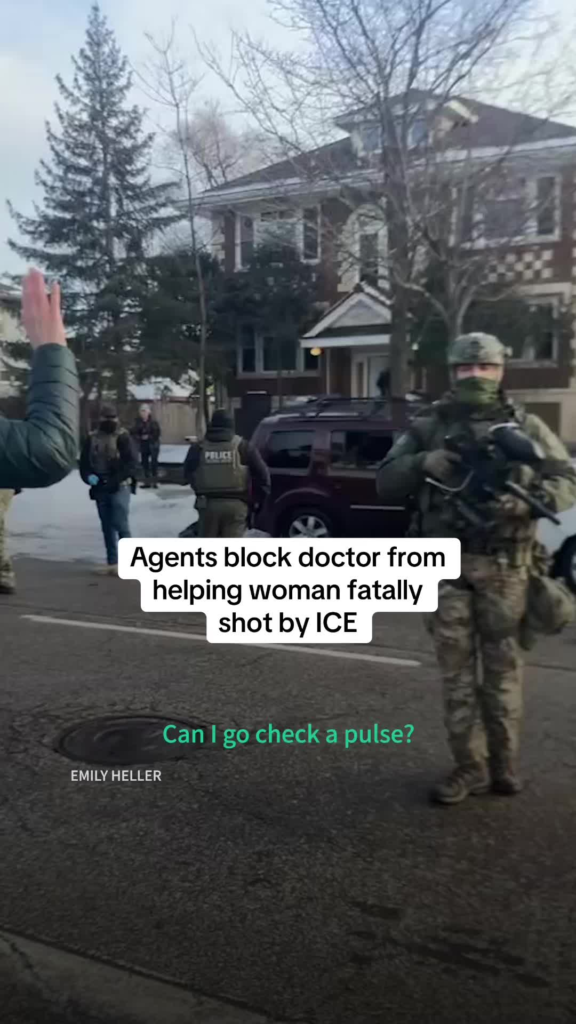
Federal agents blocked a doctor from providing medical assistance to a woman who was fatally shot by an ICE agent in Minneapolis, according to accounts surrounding the incident. The shooting occurred on January 7, 2026, despite some early reports listing an incorrect date.
The incident unfolded during a federal immigration enforcement operation in a residential area of Minneapolis. A 37-year-old woman was shot by an agent with U.S. Immigration and Customs Enforcement during what authorities described as a rapidly escalating encounter. Following the shooting, a doctor who was nearby reportedly attempted to render emergency medical aid to the woman but was prevented from doing so by federal agents on the scene.
Witnesses and sources familiar with the incident say the doctor identified themselves and offered immediate assistance, but agents refused access, securing the scene and keeping civilians at a distance. The woman later died from her injuries.
The Department of Homeland Security has stated that the ICE agent involved fired in what officials described as a defensive situation. DHS has alleged that the woman posed a threat to officers during the encounter. However, questions surrounding the events after the shooting — particularly the decision to deny medical aid — have fueled public concern and criticism.
Medical experts note that in many emergency situations, immediate care can be critical in saving lives, especially in cases involving gunshot wounds. The refusal to allow a qualified medical professional to intervene has raised ethical and procedural questions about law enforcement protocols following the use of lethal force.
Local officials have also responded to the incident. Minneapolis Mayor Jacob Frey has publicly expressed skepticism about the federal government’s narrative, stating that after reviewing available footage, he does not believe the official account accurately reflects what occurred. His remarks have intensified calls for transparency and independent review.
Civil rights advocates argue that blocking medical assistance could represent a serious failure of duty, regardless of the circumstances that led to the shooting. They emphasize that once a suspect is incapacitated, preserving life should become the immediate priority.
The incident has reignited broader debates surrounding ICE operations, use of force, and accountability. Critics say federal agencies often operate with limited oversight, particularly during joint or independent enforcement actions in local communities.
As of now, there has been no public confirmation of disciplinary action related to the decision to block medical assistance. Investigations into the shooting and its aftermath are ongoing, with demands growing for the release of additional video footage, including body camera recordings.
The death of the woman, combined with the reported denial of medical aid, continues to spark outrage and concern both locally and nationally. Many are calling for clear answers, accountability, and policy changes to prevent similar tragedies in the future.