
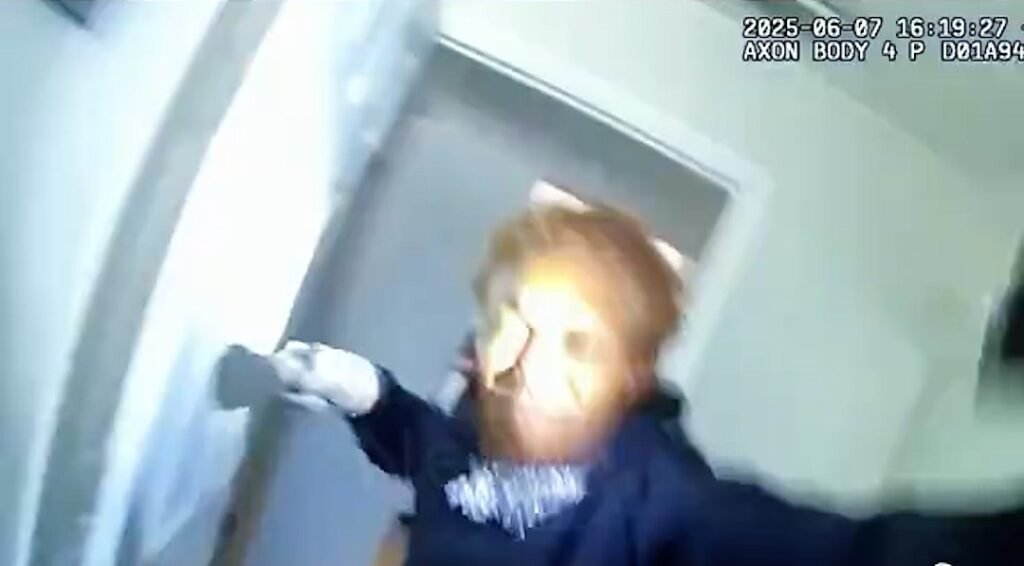
A heartbreaking incident in Orlando, Florida has gone viral after body-camera footage revealed how a 911 call for mental health assistance ended in tragedy. The video begins with a mother’s desperate plea for help as she struggles to manage her son’s deteriorating mental state. Her son, diagnosed with schizophrenia, had recently stopped taking his prescribed medication, causing his behavior to become increasingly erratic and alarming.
In the recording, the mother explains to the dispatcher that her son is experiencing a manic episode and has a warrant due to missing a court appearance tied to a conditional release requiring medication compliance. She tells the operator that he is inside the house, unstable, and in distress. Her voice reflects exhaustion, fear, and the weight of a situation families of those with severe mental illness often face alone.
As deputies arrive on scene, they begin asking critical safety questions. They inquire about weapons, specifically whether the young man has a knife. The mother responds that he normally does have one but believes she had taken it earlier that morning. Officers prepare cautiously, acknowledging the potential risk while also reminding each other of safety measures, including protective equipment.
When deputies position themselves at the door, their tone remains calm. They repeatedly call out to the man, identified as TJ, assuring him that he is not in trouble and that they only want to talk. “TJ, it’s the sheriff’s office. Come on out and talk to us, buddy,” one deputy says. Another adds, “We just want to talk to you.”
For several tense seconds, there is no response. Then, as the narrator in the viral clip states, everything changes within moments. While exact visual details remain unclear due to the abrupt ending of the TikTok edit, authorities later stated they were forced to make a split-second decision. Police maintain that they had no choice based on the perceived threat, while critics argue that it was a mental health crisis that required de-escalation, not force.
The outcome left a family devastated and an entire community divided. Online reactions to the video have been intense, with thousands questioning whether proper crisis-intervention techniques were used. Advocates for mental health reform argue that law enforcement officers are often placed in impossible positions, forced to respond to psychiatric emergencies without sufficient resources, training, or on-scene medical support.
Others point to the presence of a knife as justification for officers acting in self-defense. Law enforcement supporters emphasize that when a weapon may be involved, even uncertainty can turn deadly in seconds. Both sides agree on one sobering truth: situations involving untreated mental illness and police intervention are among the most dangerous and unpredictable calls officers handle.
This case has once again ignited national debate over police accountability in mental-health emergencies and the urgent need for better crisis response systems. Many are now calling for expanded use of mental-health professionals alongside law enforcement, as well as increased access to consistent psychiatric care for those living with severe conditions like schizophrenia.
For the mother who made the call, what began as a plea for help turned into a life-altering tragedy. Her story is a painful reminder that behind every viral body-cam clip is a real family, a real crisis, and consequences that reach far beyond the screen.