
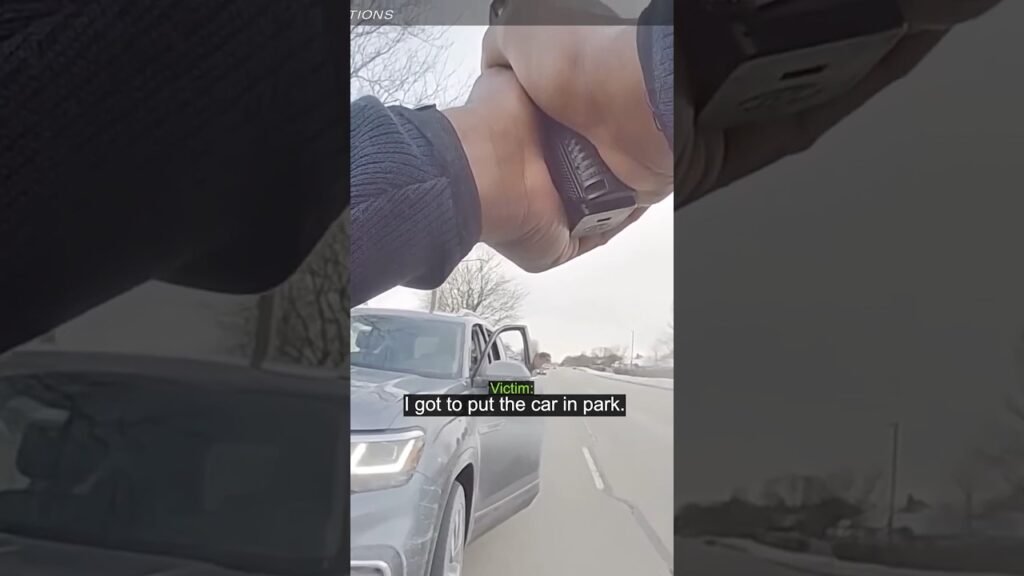
Bodycam footage from a recent police encounter shows the moment officers mistakenly detained the wrong individual during what they believed was a high-risk vehicle stop. The incident, which unfolded in a suburban roadway, highlights the complications and consequences of misidentification during rapid-response police work.
The video begins with officers instructing the driver to place his vehicle in park. The tone is serious and cautious, suggesting officers believed they were approaching a dangerous suspect. The driver complies immediately, keeping his hands visible and following every command without resistance. Despite his cooperation, the officers proceed with a full detainment, placing him in handcuffs and conducting their protocol.
Moments later, the situation takes a dramatic turn. After reviewing details and comparing information relayed by dispatch, one officer realizes the unfolding mistake and states, “This is the wrong car.” Another follows with “Two of them are off,” confirming that key identifiers used to justify the stop did not match the detained man. The officers quickly remove the handcuffs and shift their approach from enforcement to damage control.
The man, initially calm, becomes visibly upset as he processes what has happened. Officers attempt to reassure him, explaining the error and providing identification. One officer steps forward and says, “I’m going to give you my card,” signaling transparency and accountability. However, the man’s frustration intensifies as he explains the emotional and psychological impact of being wrongly detained in public.
Looking directly at the officers, he delivers a powerful rebuke: “That sh*t is unacceptable.” He then directs his anger at one particular officer, saying, “Especially you, Harvey.” This moment reflects the erosion of trust that can result from mistaken detainment, even when corrected quickly.
The footage serves as a stark reminder of the complexities officers face in real time when attempting to locate suspects based on rapidly evolving information. High-risk stops often rely on incomplete or evolving data, leading to the possibility of misidentifying innocent civilians. Although the officers corrected their mistake swiftly and attempted to de-escalate, the emotional weight of the experience clearly impacted the man.
This incident underscores the importance of accurate suspect verification, improved communication channels, and thorough confirmation procedures during high-pressure operations. It also emphasizes the critical role of officer demeanor in de-escalating situations after errors are made. While the officers attempted to take responsibility, the emotional harm caused by the detainment was unavoidable.
As bodycam videos continue to shape public understanding of policing, encounters like this highlight both the challenges officers face and the lasting impact mistakes can have on civilians. Transparency, acknowledgment of error, and genuine accountability remain essential to maintaining trust between law enforcement and the communities they serve.