
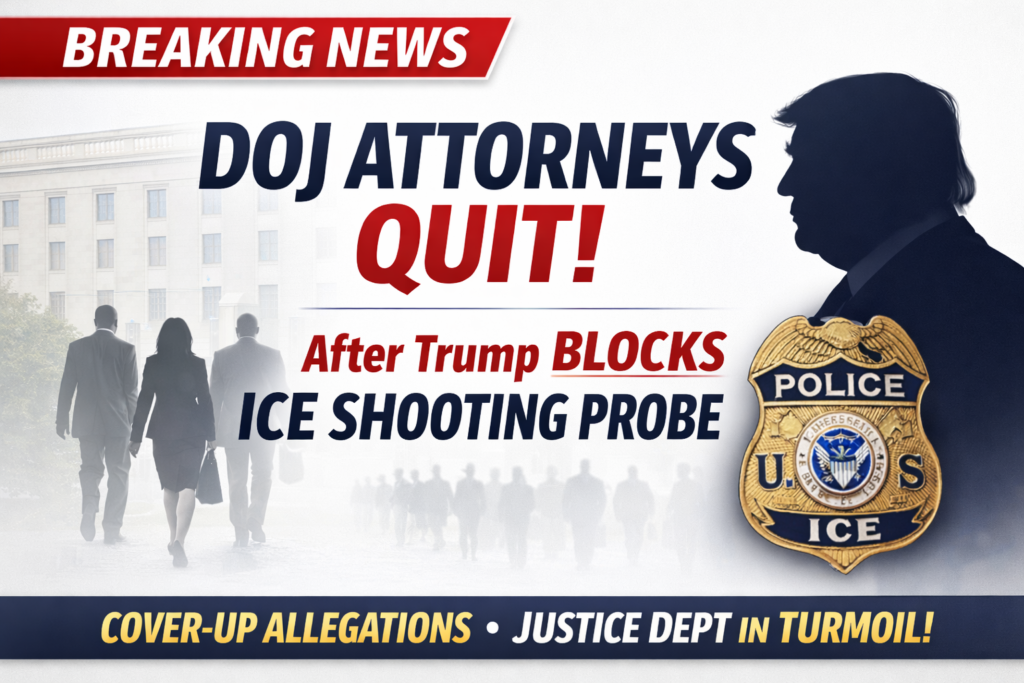
A wave of resignations has shaken the U.S. Department of Justice (DOJ) following its refusal to investigate the killing of Renee Nicole Good, an unarmed U.S. citizen shot by an Immigration and Customs Enforcement (ICE) agent in Minneapolis on January 7.
Six federal prosecutors in Minnesota, including deputy Joseph H. Thompson, resigned in protest over the DOJ’s reluctance to pursue a civil rights inquiry. Additionally, four senior lawyers from the DOJ’s Civil Rights Division stepped down, reportedly due to frustration with Assistant Attorney General Harmeet Dhillon, who has refused to open an investigation into the conduct of the ICE officer who killed Good.
Critics argue that the DOJ is politicizing justice and ignoring potential misconduct, especially as the FBI took control of the case and began probing aspects of Good’s life rather than the shooter’s actions — while barring local authorities from involvement.
Video footage contradicts official claims that Good posed a threat, showing her attempting to avoid conflict, according to civil rights advocates. Yet the Trump administration has portrayed Good as a “domestic terrorist” without publicly releasing evidence to support that designation, prompting strong accusations of a cover-up.
Since President Trump’s second term began, more than 250 attorneys have reportedly departed the civil rights division amid broader internal strife and shifts in departmental priorities, further fueling concerns about accountability and political influence within the DOJ.